Civil Engineering stories
A new University of Colorado Boulder model suggests crowded, poorly ventilated spaces raise coronavirus risk, especially without masks.
Tender documents have been issued for two Auckland transport schemes, bringing planned roadworks a step nearer and easing congestion for growing suburbs.
Contractors must now issue travel letters and display QR posters as COVID-19 rules tighten across Alert Levels 2 and 3.
Corrosion-free reinforcement is gaining traction as engineers seek lower maintenance costs and longer-lasting bridges, seawalls and dams.
Delayed project details are leaving construction firms unable to plan, risking job losses as ministers drip-feed a $2.6 billion infrastructure package.
Transport industry groups say decades of stop-start planning could end if National’s $31 billion road and rail programme goes ahead.
With only a fifth of NZD$2.6 billion in promised projects released, contractors warn delays are already forcing layoffs and weakening confidence.
The proposed $31 billion programme would reshape commuting in the upper North Island, while relying on RMA repeal and borrowing powers.
Its 400-plus service points across Australasia are helping customers cut costly downtime as Hydraulink adds new distributors and branches.
Construction firms warn that without tender dates, thousands of workers could be laid off despite USD $2.6 billion already allocated.
The project will add 93 MW of capacity and offset 100,000 tonnes of CO2 a year as MainPower begins site works near Waipara.
Experts say the $50 billion COVID-19 recovery plan will lift jobs and infrastructure, but warn it leaves big tax and housing gaps.
Better freight services and more reliable trains are set to follow, as the funding also covers new ferries and ageing locomotives.
New distancing and travel rules aim to help builders restart safely under Level 2, with updated protocols now available online.
New safety rules will let building sites reopen under Alert Level 3, helping protect workers and avoid a return to stricter lockdowns.
Construction firms now have detailed COVID-19 rules to resume work under Alert Level 3, aiming to protect workers and avoid a return to lockdown.
Cashflow support and clearer contract rules could help keep builders employed and speed New Zealand's economic recovery after the lockdown.
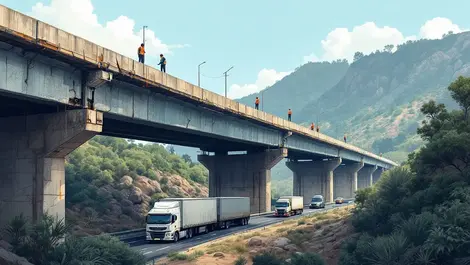
Bridge checks could become cheaper and more consistent as Waterloo researchers use autonomous robots, cameras and lidar to spot defects.
One-third of construction jobs are at risk as firms brace for insolvencies and shift training and services online to survive the lockdown.
Thousands of New Zealand construction workers face redundancy within months unless sites can reopen safely and government support is stepped up.