

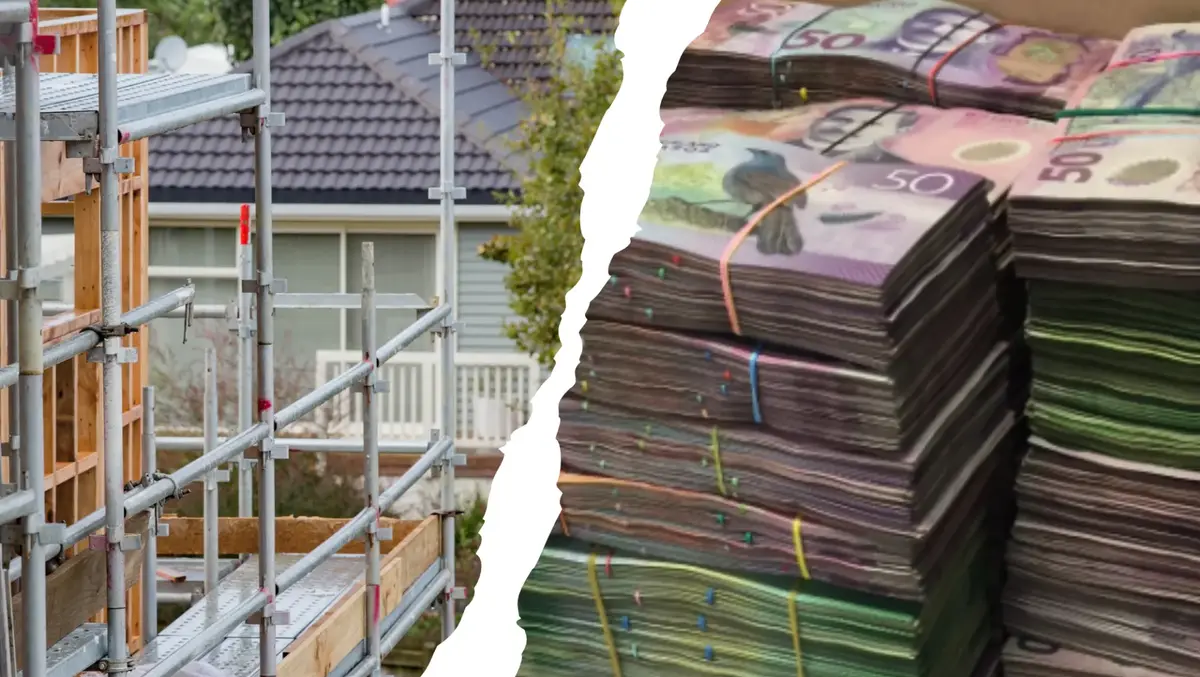
When dirty money meets the building industry
Thu, 15th Oct 2026 (Today)
New Zealand's construction industry is built on billions of dollars, but behind the building sites and property developments, a murky criminal story has emerged.
It involves dirty money, money laundering and organised crime.
A new police report to the government says hundreds of millions of dollars is being laundered through the construction industry each year by organised crime groups. New Zealand Herald journalist Jared Savage has covered the story at length and talks to The Detail about it.
Investigations have exposed how criminal profits can flow through legitimate-looking construction businesses, raising questions about how deeply the underworld has penetrated the industry and how it affects law-abiding businesses.
"It's driving legitimate businesses into the ground because they can't compete with others who have an unfair advantage," Savage tells The Detail.
So how are criminals turning dirty cash into legitimate wealth, and just how big is the problem?
"It's an interesting one because we don't actually know the full scale. This is an emerging problem police have come across in the last few years, and they've only recently started talking to the construction industry about how big a problem it is."
But one investigation alone, called Operation Scuba, identified "about $70 million flowing through the construction industry".
"Police talk about it being this marriage of convenience between gangs who want to get rid of cash and then sort of dodgy contractors in the construction industry who want cash.
"So, you've got one party wanting to get rid of cash and the other party wanting to use cash to pay their staff ... under the table and it's created this marriage of convenience.
"It's a money go round: it goes in as dirty cash, gets washed through the construction industry and then comes back out the other side as legitimate cash in shell companies which they can then use to purchase property, send overseas whatever they want to do with it, because now, for all intents and purposes, it looks like legitimate money."
All the while exploiting migrant workers, dodging tax and undercutting legitimate operators.
But police are now cracking down on these criminal tactics.
A recent high-profile investigation led to Comanchero motorcycle gang members - and a disgraced Auckland accountant - being convicted and jailed.
The accountant, Khieng Chiv, pleaded not guilty to laundering nearly $7.8m of drug money, but Operation Scuba unravelled the complicated financial structures he'd built to disguise the criminal behaviour.
Millions of dollars were funnelled into shell companies, and a senior gang member was bought a $3.8m home, along with two businesses in Ōrewa.
"So, if you've got an accountant, you normally don't tell them that you're going to cave their effing head in if they don't start pulling their weight - that was one of the giveaways," Savage says.
"And other messages were talking about the need to send $3 million to Dubai essentially to fulfil a drug order from a Mexican cartel."
He says Chiv got a "huge prison sentence too, in excess of 10 years, which is the longest sentence for money laundering we have actually had in New Zealand - it does send a message".
Savage says the construction industry, including Master Builders, isn't ignoring the problem, with members reminded they should know who is working on sites, to make sure contracts are audited and to have a lot more "transparency and rigorous kind of checking ... to stop this cash wages from happening".
"They're working on a national framework as well to kind of put a lot more sort of checks and balances in place so that to make it a lot harder for cash wages money laundering to take place."
He says the gangs' illegal work is taking a brutal toll on those operating "above board".
"You've got legit businesses out there who just can't compete with guys who are effectively cheating us all.
"I think a few light bulbs have gone on post reading this story. I've had some people contacting me saying, 'Oh, we wondered why us and three others put in roughly the same kind of bid for the work, and it went to someone else who was way cheaper; we just couldn't work out why they were so much cheaper,' and now they do.
"So, it's not just a crime problem. This is a huge economic problem as well."