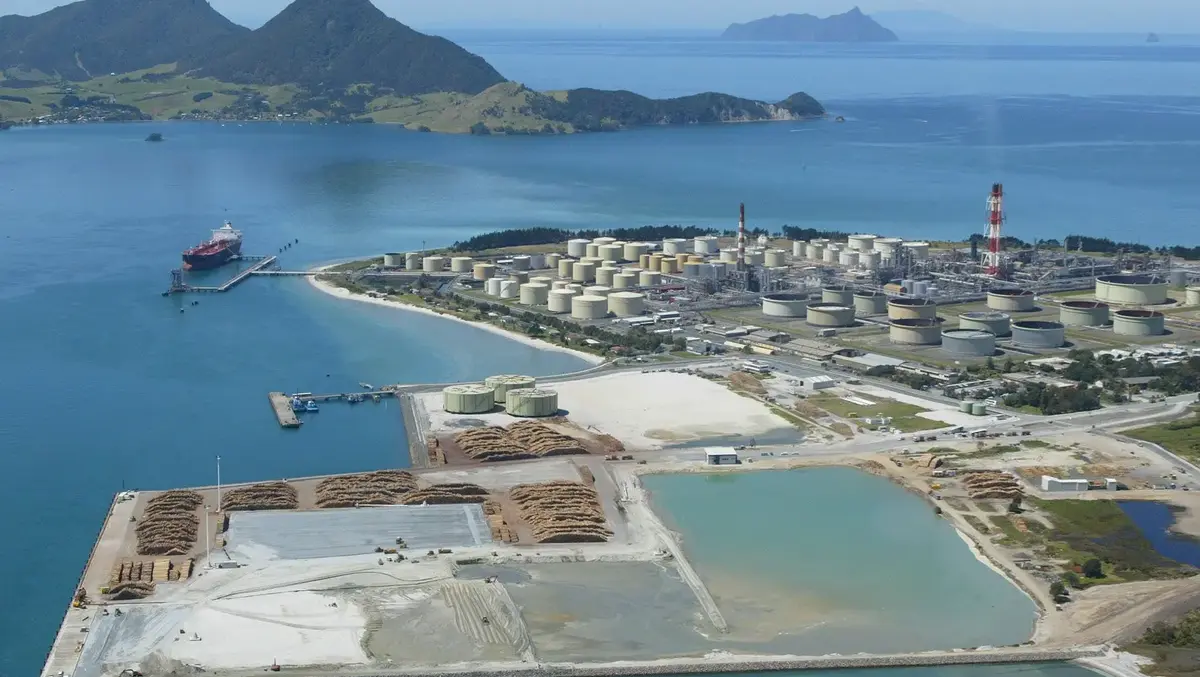
Residents urge Government to move $500m Northland drydock
Tue, 6th Oct 2026 (Today)
Marsden Bay residents are urging the Government to relocate a proposed $500 million shipyard and drydock due to fears the fast-tracked project will impact the nearby homes.
The Marsden Bay Residents Association says the ship-maintenance operations could bring potential health, noise and air quality impacts to within 375 metres of homes, if built in its proposed western location.
An Association representative says they support the Marsden Point drydock but want it moved about 2km east down Whangārei Harbour to Northport's existing wharf and maritime precinct.
The Government, through the Ministry of Business, Innovation and Employment (MBIE), is seeking fast-track approval for the 250 metre floating drydock, which would be capable of servicing Cook Strait ferries, naval ships and large commercial vessels.
Regional Development Minister Shane Jones said the shipyard and marine maintenance facility was regionally and nationally significant, particularly once the new inter-island ferries arrive.
He said a Marsden Point facility would reduce transit costs and emissions, while allowing large ships to undergo hull cleaning and maintenance in New Zealand instead of travelling to overseas facilities in places such as Sydney and Singapore.
"The scale of this project means construction would provide a significant boost to Northland."
He said $100m from the Government's regional infrastructure fund had been ring-fenced for the project.
The application was lodged with the Environmental Protection Authority on August 20, deemed complete on September 17 and is now heading to an independent expert panel.
Marsden Bay Residents Association member Captain (SUBS: correct) Paul Hines, who has lived alongside Whangārei Harbour's Blacksmiths Creek for much of his life, said the issue was not whether the drydock should be built, but where.
"We want the drydock. But we want it in the right place," Hines said.
"The western location's a dead duck."
Hines said moving the new development east would shift the proposal away from residential areas and group the maritime infrastructure within the established port area.
Among residents' concerns were the impact of hull blasting, which dealt with potentially hazardous materials in ship coatings, including asbestos in older vessels, and paints containing lead, copper and zinc, he said.
Residents at Marsden Bay, Marsden Cove and One Tree Point on the harbour's southern side, along with Reotahi at Whangārei Heads on its northern shore, would be most affected.
About 150 waterfront homes in the Marsden Bay and One Tree Point area would be among those most directly impacted.
"If you can see the lights of the existing port, you will be impacted."
He said building the drydock in the west would also be considerably more expensive because substantially more dredging would be required due to its shallower 7m depth compared with the eastern location's natural 17m deep water.
Hines has more than 40 years' maritime experience, including senior port management, pilotage, international ship command and extensive drydocking involvement. He holds an MBA in maritime management and qualifications in port and terminal management.
The Government proposal would significantly reshape Whangārei Harbour by reclaiming almost 14 rugby fields of publicly accessible harbour space. The project would require more than 753,000 cubic metres of dredging, enough wet material to fill the equivalent of about 150,000 10-tonne truckloads.
Hines said the group would be paying close attention to the appointment of the independent fast-track Expert Panel and intended to seek an opportunity to address the panel.
He said residents would have preferred the proposal to proceed through conventional resource consenting rather than the fast-track process, which limited opportunities for community feedback.
Hines said Northport had shifted the focus of its port expansion east in 2022 after marine ecology constraints were identified in the western area. The eastern expansion was later approved by the Environment Court.
Part of the project area overlaps the 198ha One Tree Point to Marsden Bay Significant Ecological Area (SEA).
The development would permanently remove just under 10ha of marine habitat, equivalent to about 14 rugby fields, including about 3.93ha within the SEA, equivalent to roughly 5½ rugby fields.
Project documents identify Blacksmiths Creek walkway, Marsden Bay Beach and recreational users of Whangārei Harbour as key public locations potentially affected by dust, odour and paint overspray generated by the proposed shipyard.
The project's air quality effects assessment found several paint-related contaminants could exceed health-based guideline values if sprayed without containment.
While blasting, grinding and hammering would be restricted to daytime hours, project documents state the facility would seek the ability to operate 24 hours a day, seven days a week.
The project's noise management plan identifies hull blasting as the shipyard's loudest activity and says noise may at times be "higher than desirable" for residents in Marsden Bay and Reotahi.
MBIE was asked to comment on residents' concerns plus calls to shift the drydock east and why it had chosen the western option.
It did not specifically respond to those concerns.
A spokesperson outlined the proposal's journey to date.
"The next step is for an expert panel to be convened to consider the application, determine the appropriate parties to engage with, seek further information if required and decide whether to approve or decline it," the spokesperson said.